
Enter password to view case study
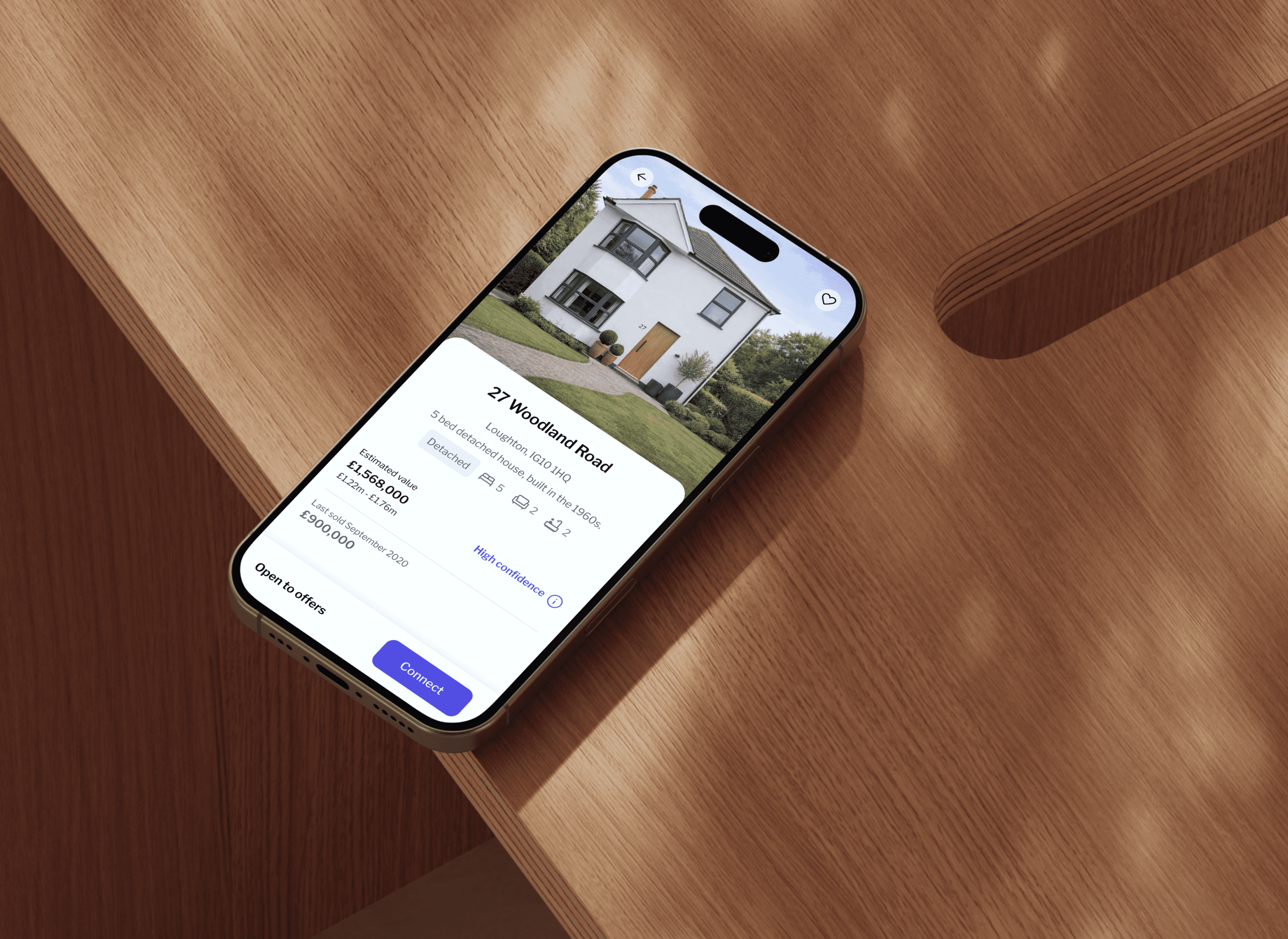
Nokkel was an early-stage property startup backed by FNZ, with a bold idea: connect buyers directly with homeowners and unlock value from residential property in a way the market hadn't seen before.
As Lead Designer, I owned the end-to-end experience across iOS and Android - from first research session to shipped screens. When I joined, there was no buyer research to build on. Decisions were made on assumption, product bets were unvalidated, and I pushed to change that.
The PM and I ran a series of discovery sessions together. What we heard shaped every growth decision that followed.
Role -
Leaad Product Designer
Deliverables -
Research
Product Design
Design System
Research informed everything - including how we approached the design. Three principles guided every decision we made:
Clarity over complexity
My hypothesis was that many customers were calling to make payments could resolve the issue digitally if the journey was clearer and easier to complete on mobile. By sending customers a personalised SMS link to a simple payment flow, we could reduce support calls and increase successful online payments.
Affordability in context
Users who can't quickly assess whether a property is within reach don't save it, don't return, and don't convert. We embedded affordability into the discovery experience to reduce that abandonment moment.
Support exploration
Most buyers aren't ready to act on first visit. Designing for repeat sessions and longer consideration cycles rather than pushing toward a single decision was how we thought about building retention into the product from the start.
Property discovery connected to affordability
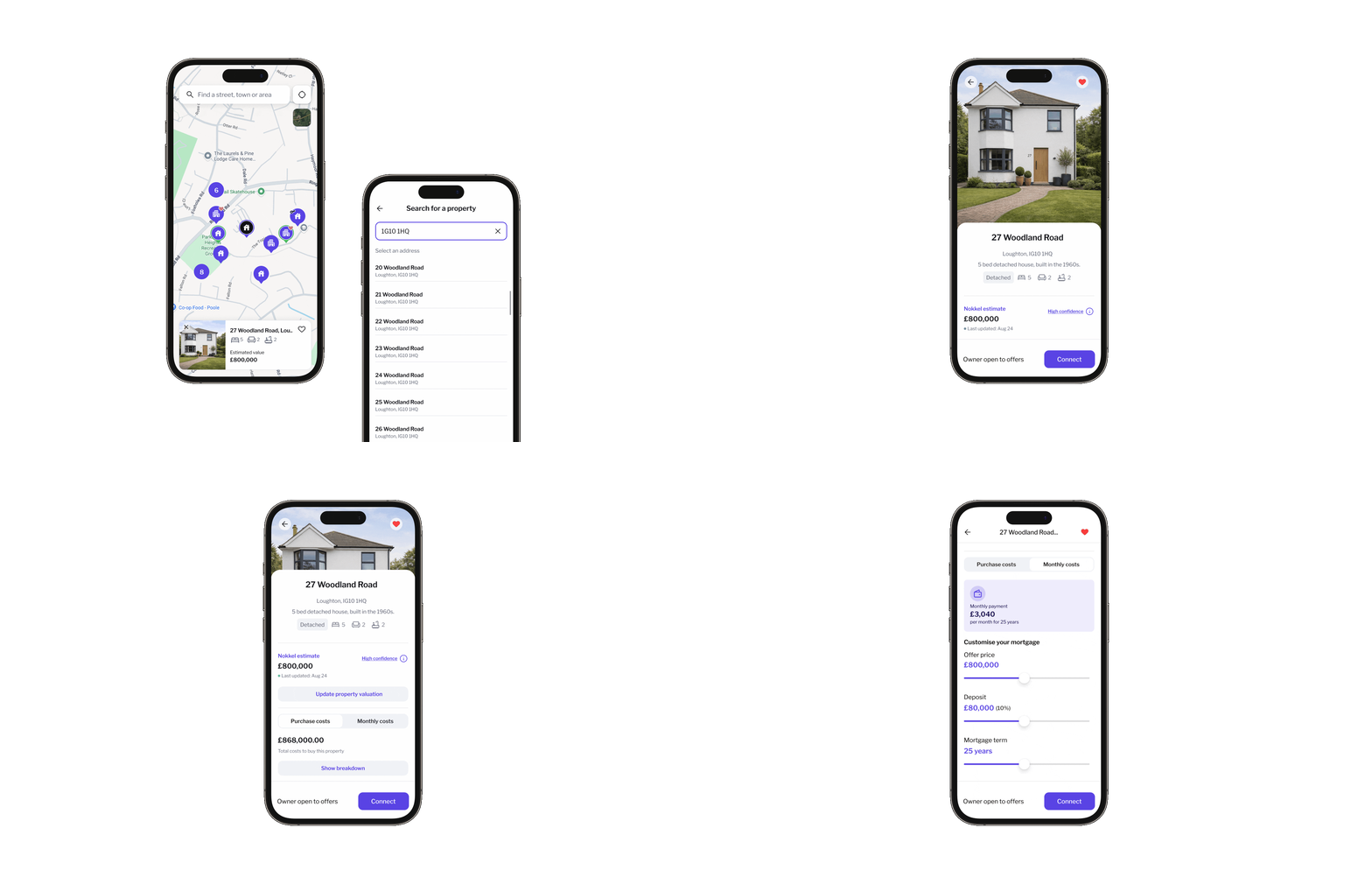
Most property platforms in 2023 treated search and mortgage tools as entirely separate experiences. That separation created a drop-off point: users would find something they liked, hit a wall of financial uncertainty, and leave to figure it out elsewhere and often not coming back.
We closed that gap. Buyers could search by map view, postcode or address, and once they selected a property, estimated mortgage costs and monthly repayments surfaced immediately in context. The intent was to eliminate the moment of uncertainty that was killing engagement. By giving users their number early, so they could keep moving through the experience rather than bouncing out of it. At the time, this kind of integrated affordability wasn't common on property platforms. It was a genuine point of differentiation.

Understanding property ownership context
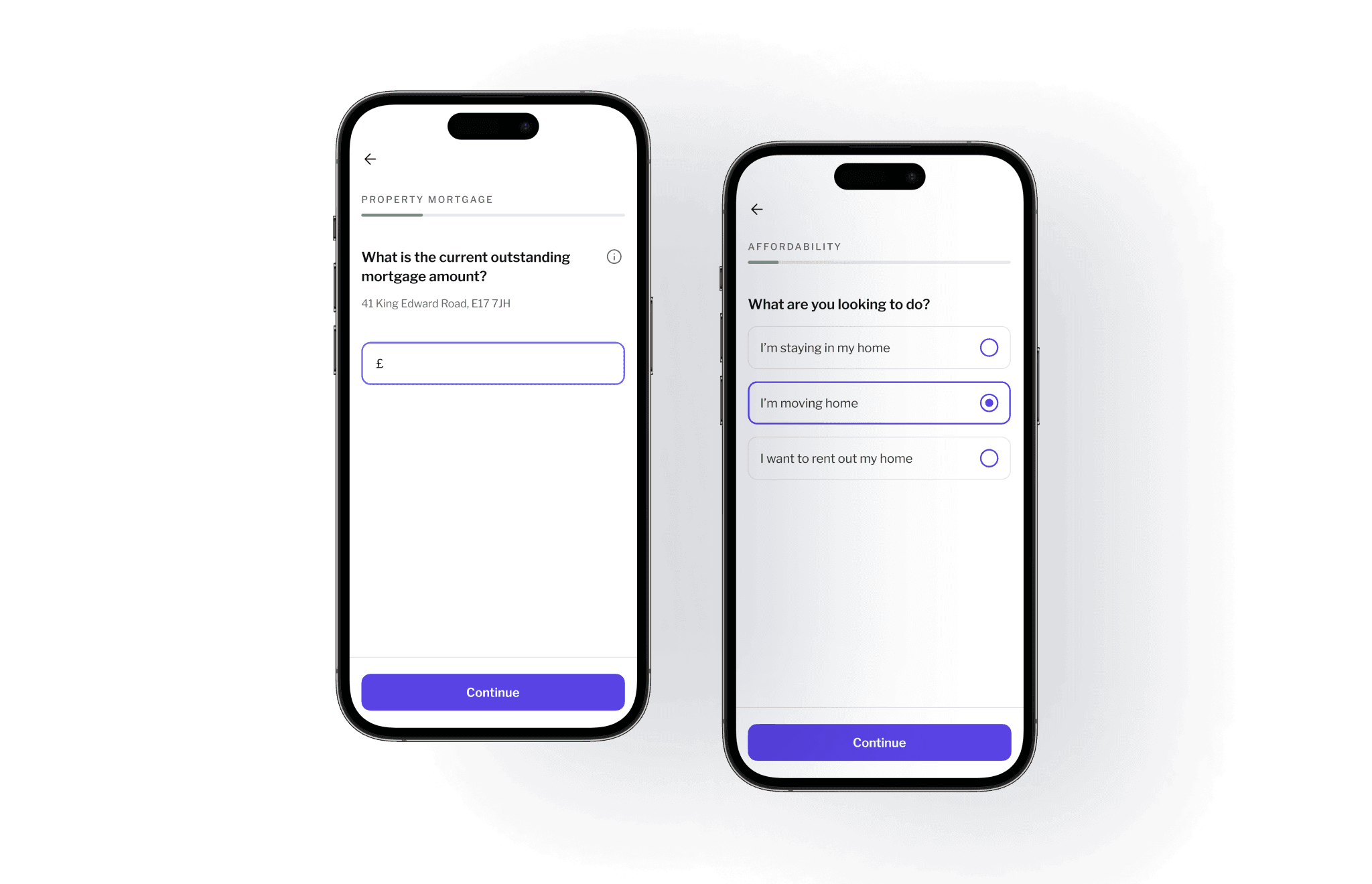
To make affordability estimates accurate enough to be useful, we needed context — but capturing it had to be fast. A long onboarding flow would tank activation rates before users ever reached the value.
A short set of targeted questions — does the buyer already have a mortgage, or are they financing a new purchase? — gave us what we needed without adding friction. The experience stayed lightweight and exploratory. Users got to a personalised result quickly, which was the moment the product started to feel worth staying for.
Supporting exploration and saving properties
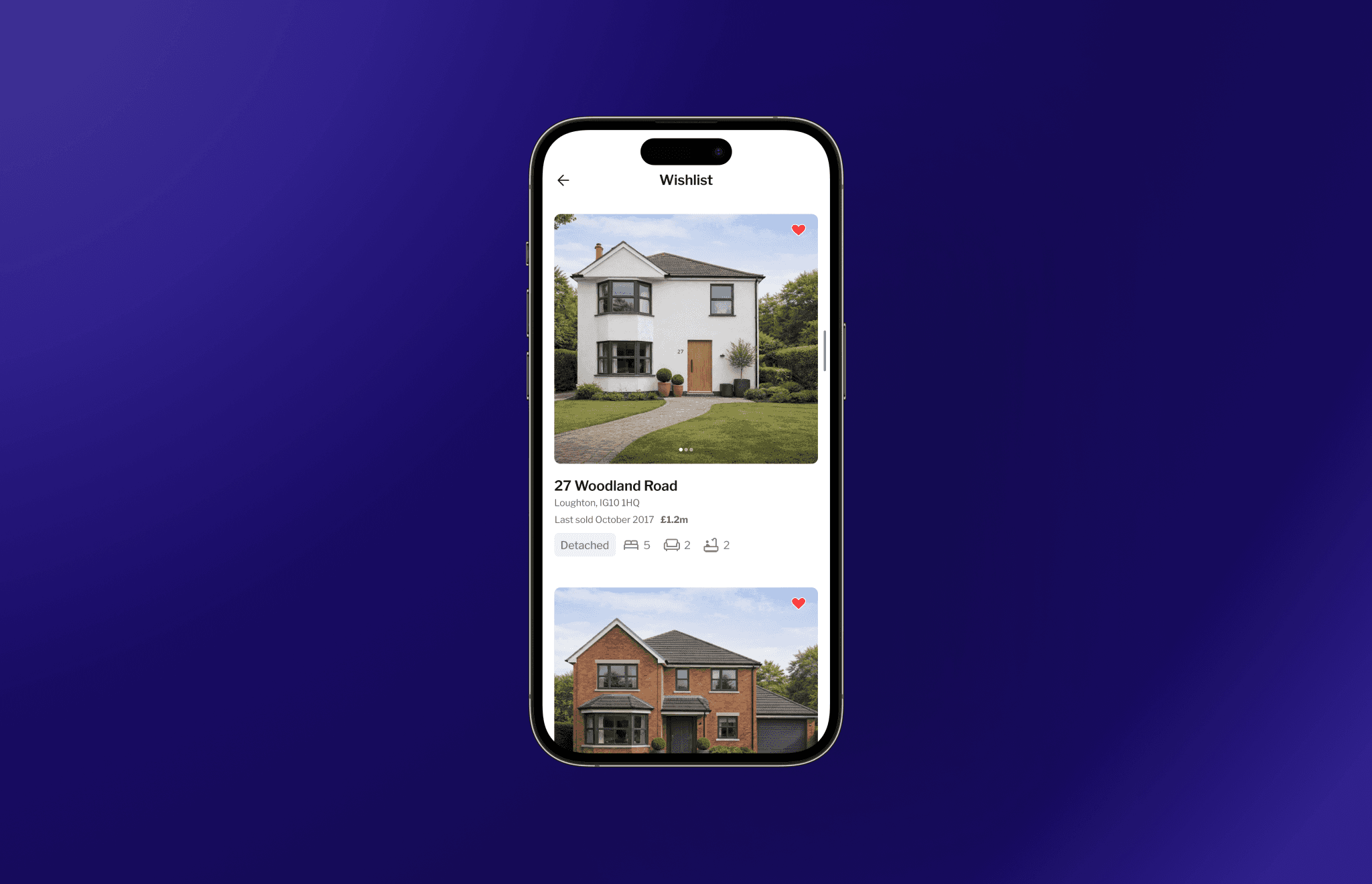
Research made one thing clear: most first-time buyers are in a long consideration phase. They're not ready to commit — they're building a picture of what's possible. If the product only served people ready to act, we were designing for a tiny slice of the actual audience.
The wishlist feature addressed this directly. Letting buyers save properties and revisit them over time created a reason to return — repeat sessions, longer time-in-product, and a growing personal dataset that made the app more useful the more they used it. It was a retention mechanic as much as a UX feature.
Next phase
The MVP established the affordability-led model. The next phase was about turning that engagement into a commercial growth engine.
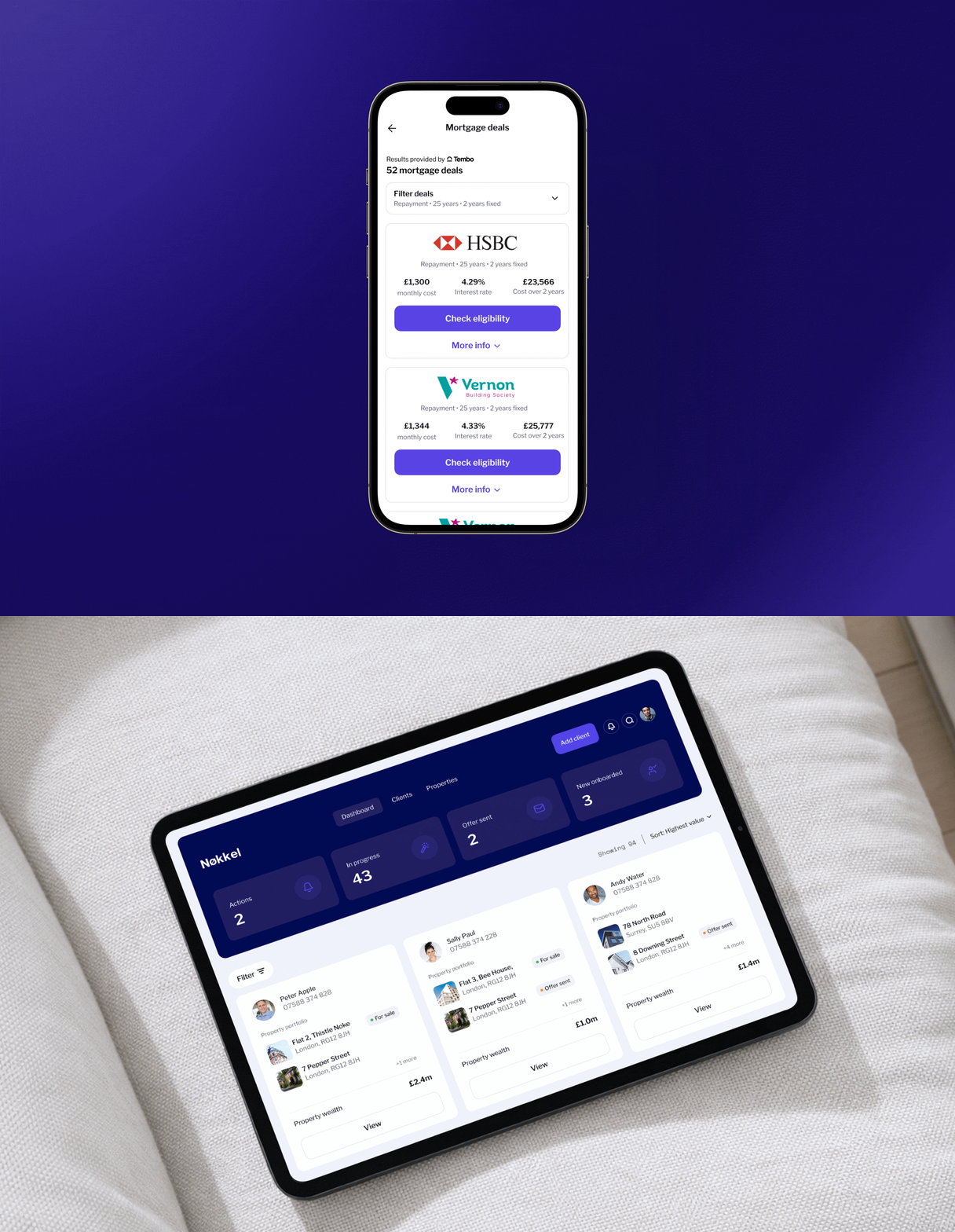
A licensed broker partnership would allow buyers to move from affordability estimates to live mortgage products within the same experience — dramatically increasing the product's value at the point of highest intent. For Nokkel, it also unlocked a B2B revenue stream: financial advisors gaining access to qualified leads who had already self-selected through affordability discovery. The consumer product and the advisor platform would feed each other. Good design for users was also good economics for the business.
Outcome
Validated through 10 research sessions, the affordability-led search model gave the product a clear retention hook, a meaningful point of differentiation from existing platforms, and a roadmap that connected consumer engagement directly to commercial outcomes — broker-integrated products, an advisor platform, and a new partnership revenue stream.
Reflection
The core challenge was bridging property discovery and regulated mortgage products — two things that don't naturally sit together. The approach was to lead with what we could deliver well right now (indicative affordability signals) and design a clear path toward what we wanted to build (live products, broker integration, advisor platform).
What stayed with me from Nokkel was this: at an early stage, growth doesn't come from optimising what exists — it comes from correctly identifying where the drop-off is and designing something that removes it. The research gave us that. Everything else followed.