
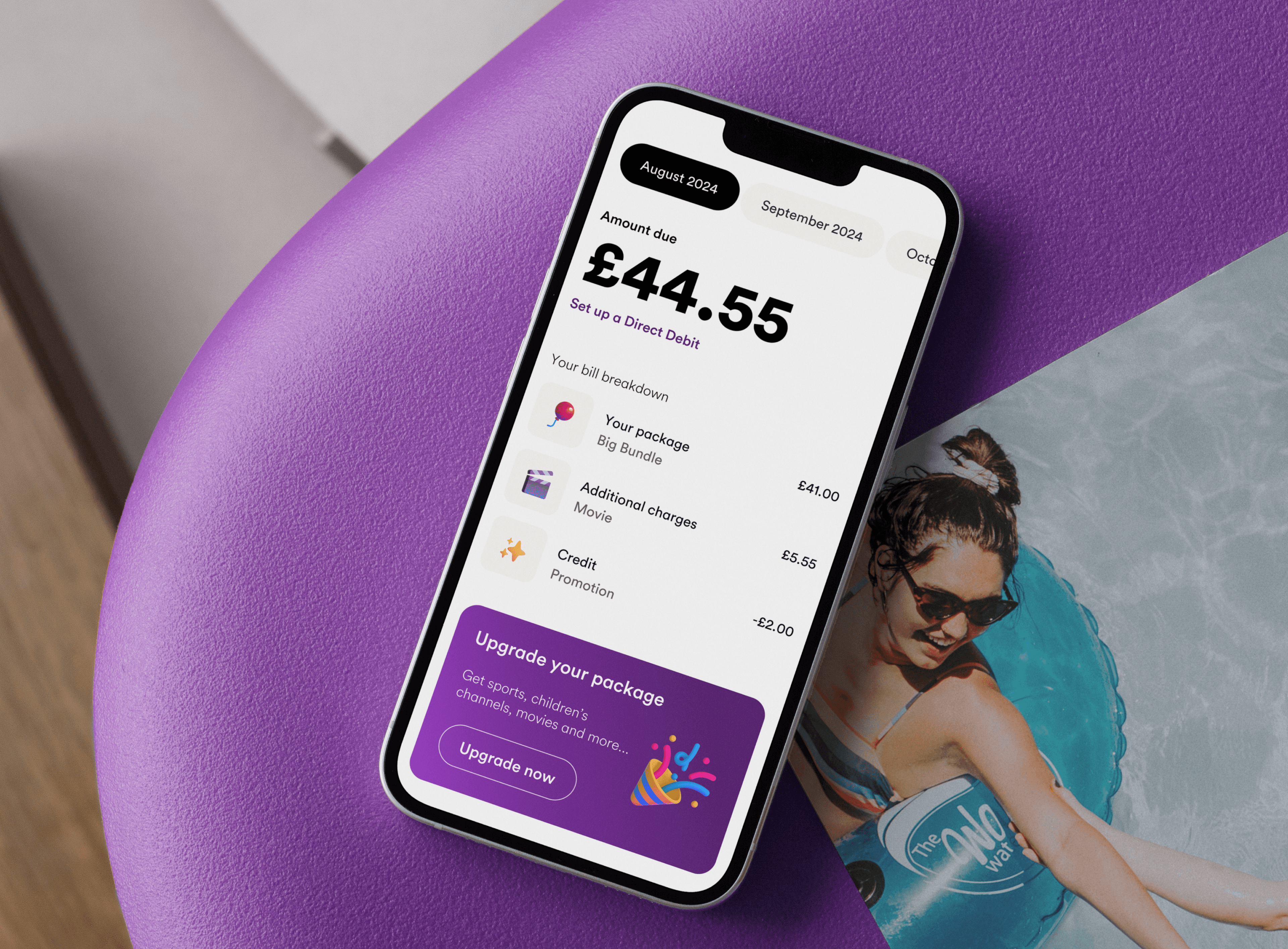
Within Virgin Media's Billing & Payments squad, I designed and tested targeted experiments across bill communication, account access and payment flows - reducing support demand and helping customers resolve issues independently.
As Lead Designer, I defined hypotheses from call-centre data and customer insight, designed and ran the experiments, and worked closely with engineers to ship them. This case study covers a selection of those experiments.
Role -
Leaad Product Designer
Deliverables -
A/B Testing
Experimentation
Product Design
Analyse support data
Identify friction
Run experiments
Measure impact
Experiment 1
Personalised payment journeys
My hypothesis was that many customers were calling to make payments could resolve the issue digitally if the journey was clearer and easier to complete on mobile. By sending customers a personalised SMS link to a simple payment flow, we could reduce support calls and increase successful online payments.
HMW…
help customers restore service without contacting support?

Design approach
We tested a Digital IVR to SMS to mobile payment flow designed to help customers resolve payments without speaking to an agent - adapting messaging and options across three scenarios: restricted services, overdue payments and upcoming payments.
Customers received a personalised SMS with a secure link, were presented with clear payment options based on their account status, and could complete payment quickly via card through a secure third-party provider.
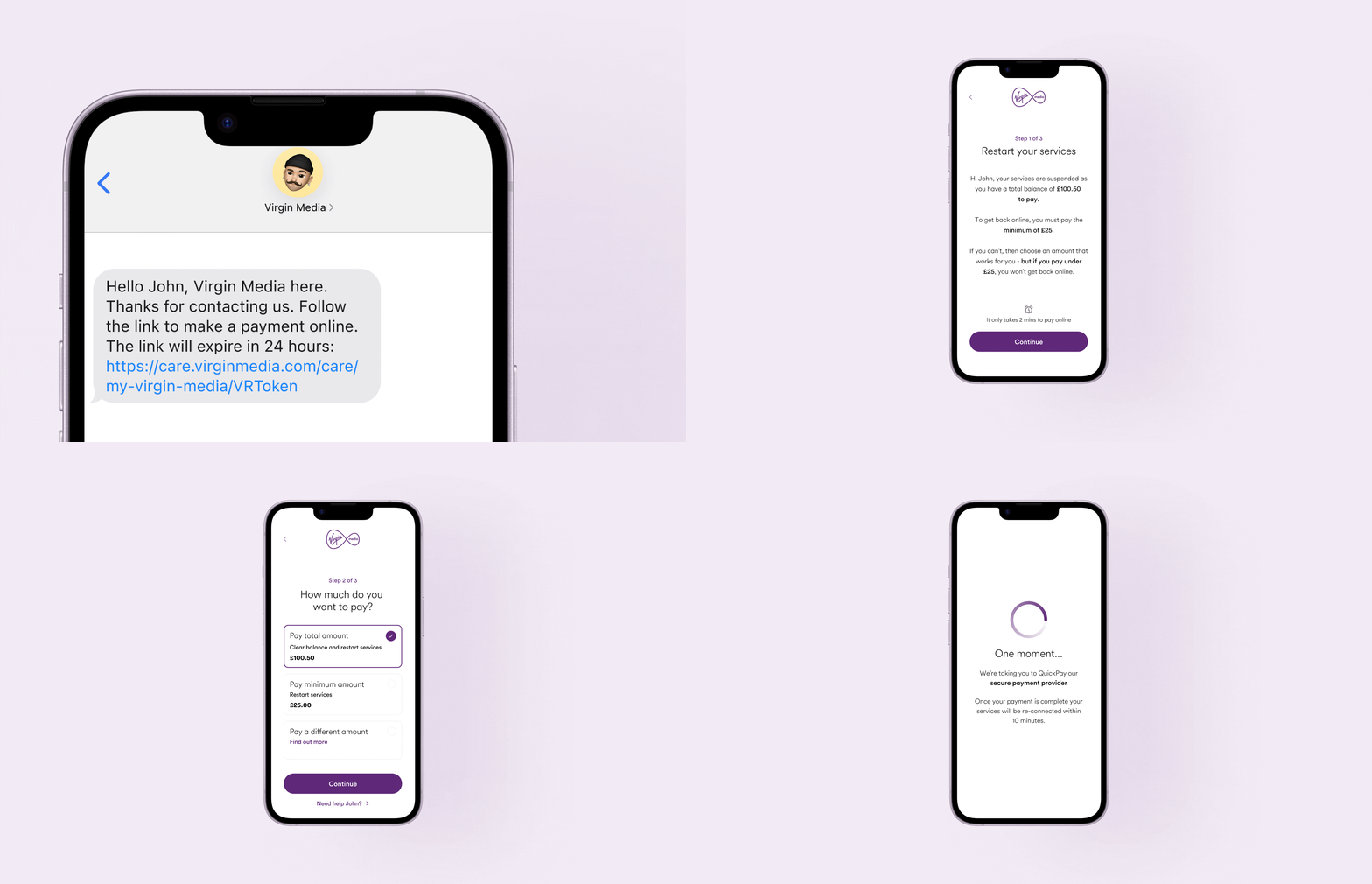
End to end mobile payment flow from SMS entry point through personalised payment options to secure checkout.
Impact
The experiment showed that a simple SMS-to-payment flow could successfully move customers from support channels to digital self-service.
Payment completion ↑ 18%
SMS engagement - 1.2M clicks
Support demand ↓ 22%
Experiment 2
Simplifying account access with one-time PIN login
My hypothesis was that customers often contacted support because they were unable to access their accounts. By replacing password-based login with a one-time PIN sent to the registered device, we could simplify access and reduce account-related support calls.
Design approach
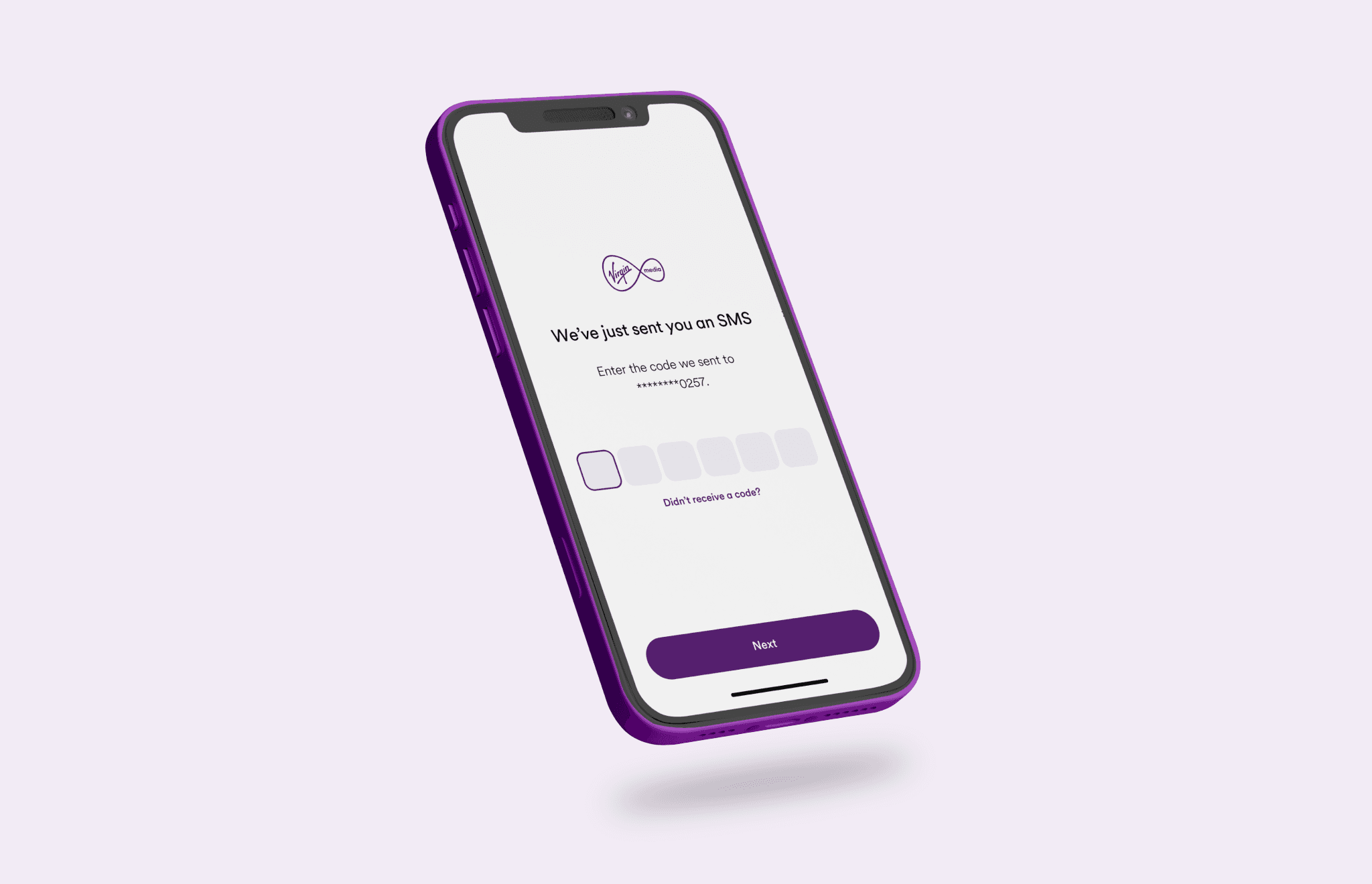
We tested a passwordless login flow using a one-time PIN sent via SMS or email, designed to minimise friction while maintaining security. Customers enter their account details to request a code, which is sent to their registered mobile number - entering the PIN grants immediate account access without needing to remember a password.
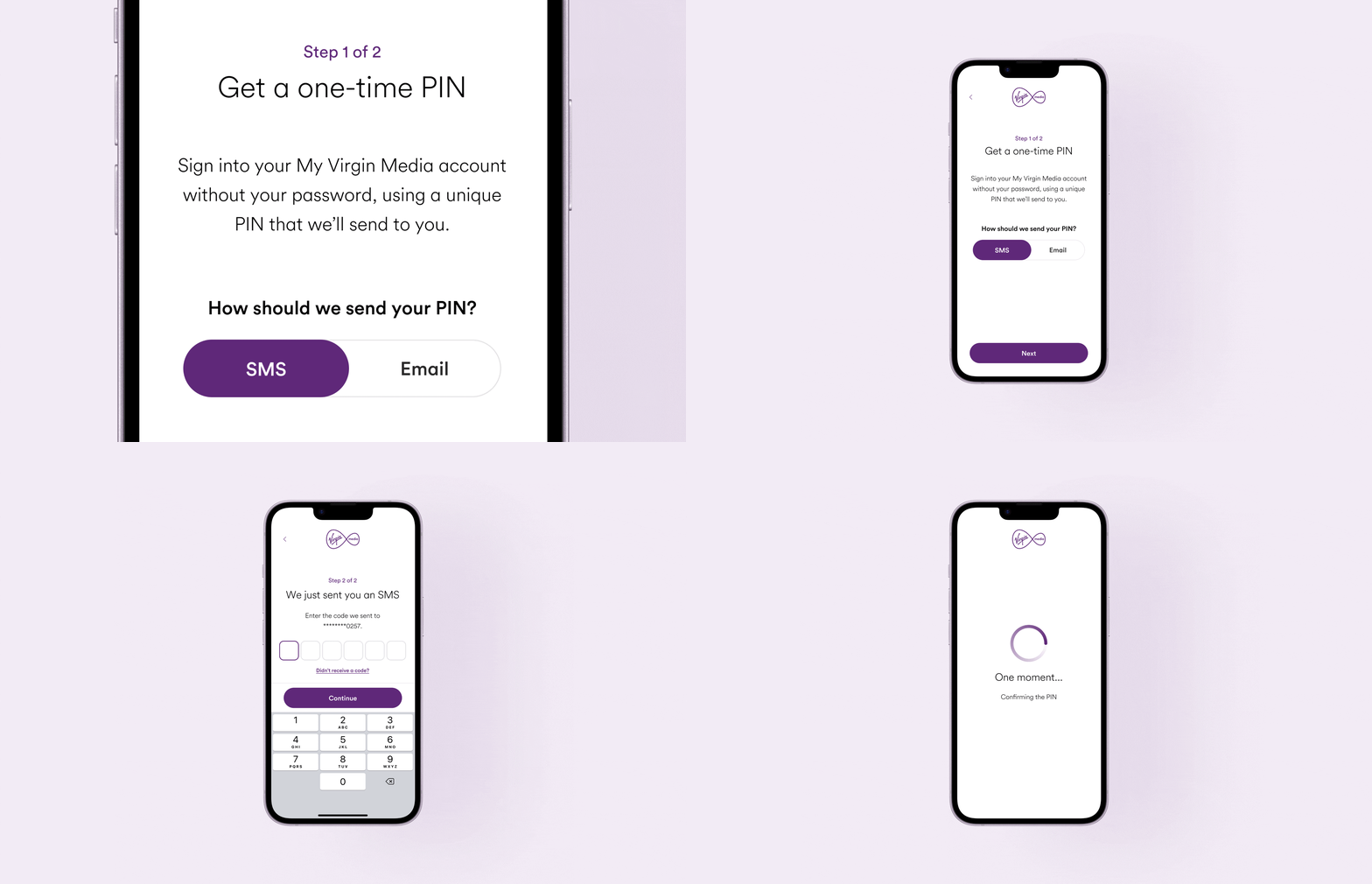
Passwordless login flow using one-time PIN verification.
Impact
SMS proved to be the most reliable authentication method, though testing also revealed opportunities to optimise the validation window. Removing password friction made it significantly easier for customers to access their accounts and resolve issues independently.
Login success rate ↑ 67%
PIN sessions tested - 47K
Reduction in login-related calls ↓ 13%
Experiment 3
Helping home movers understand billing changes
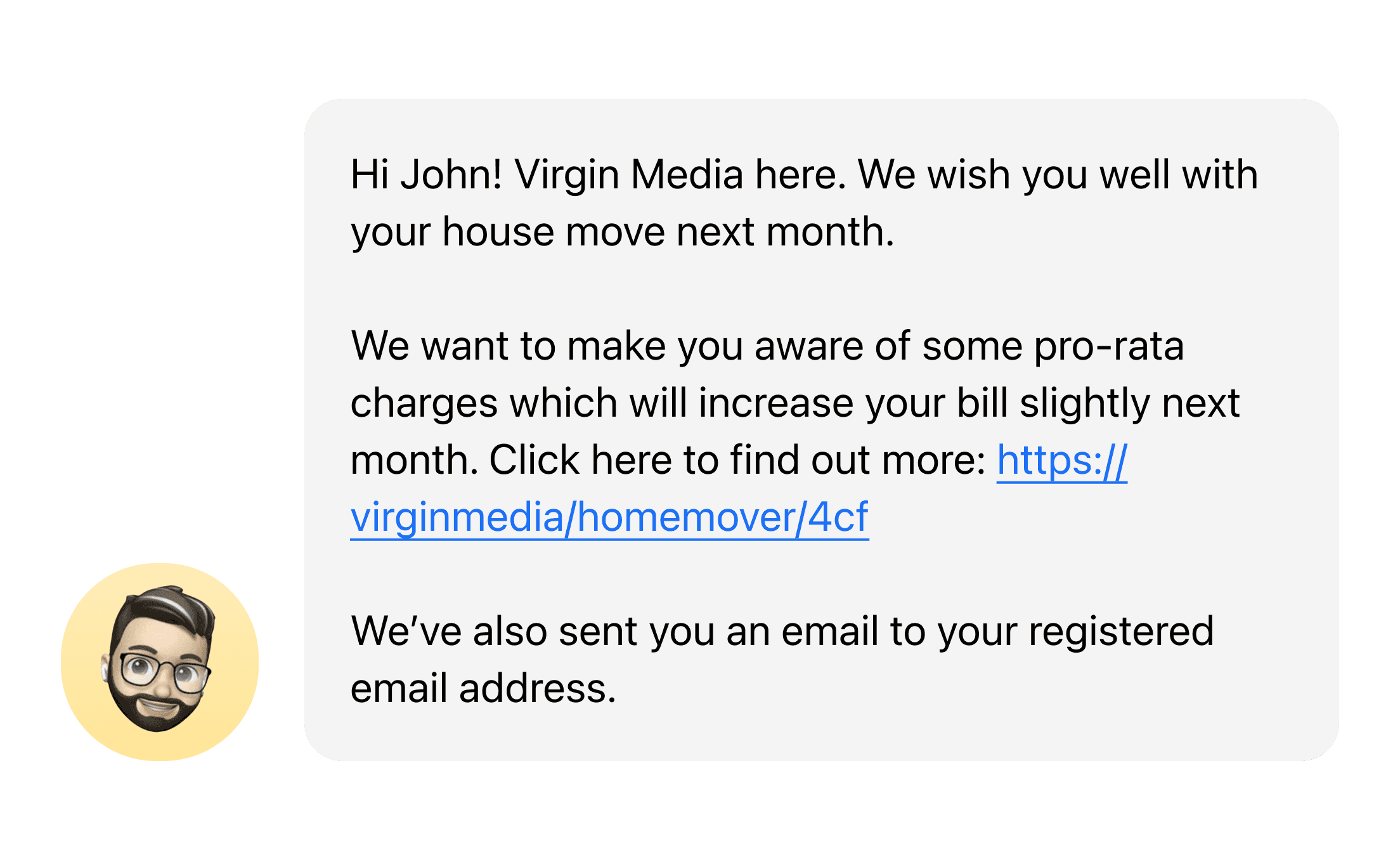
My hypothesis was that customers that were moving home often contacted support because they didn’t understand changes to their bill. Pro-rata charges, overlapping billing periods and service changes frequently created confusion. By explaining these changes more clearly during the moving journey, we could reduce unnecessary support calls.
Design approach
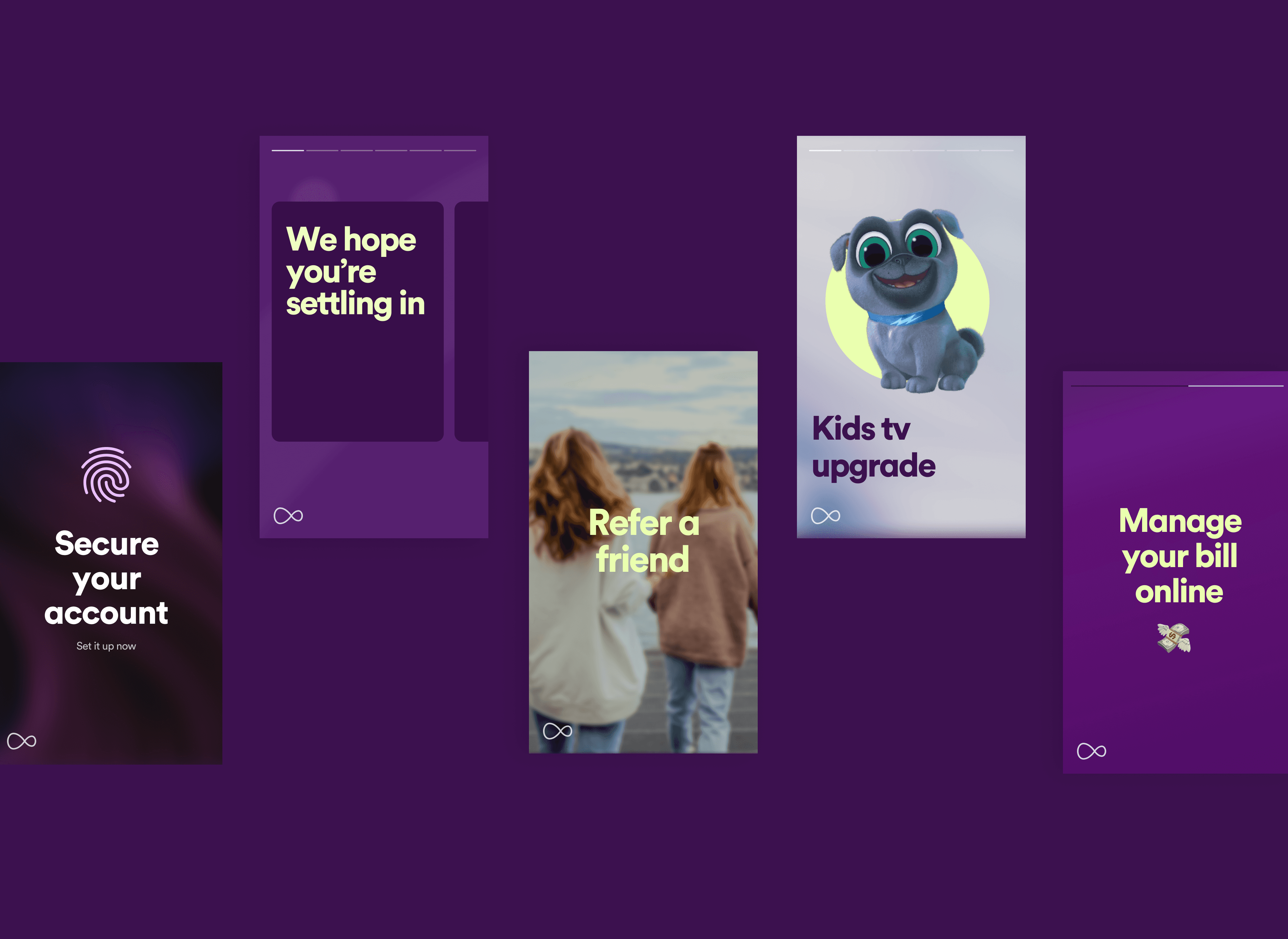
I designed a story-style communication flow to explain billing changes in simple, digestible steps during the home moving journey - guiding customers through what changed, why it changed, and what to expect next. The goal was to help customers understand their bill before confusion led them to contact support.
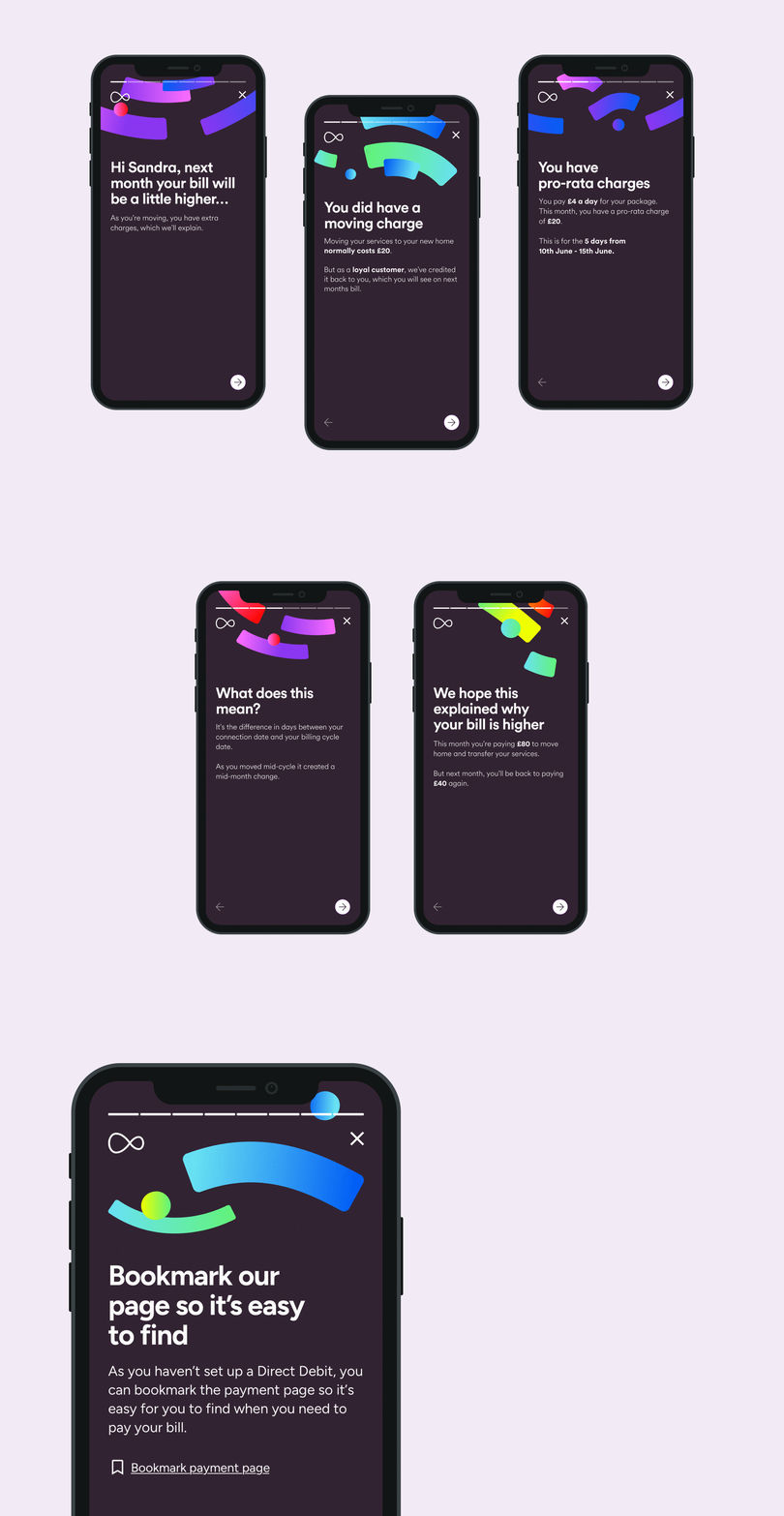
Interactive flow explaining billing changes during the home moving journey.
Impact
Providing clearer explanations during the moving journey helped reduce confusion and prevented unnecessary support calls.
SMS click-through rate - 62%
Journey completion rate - 56%
Home-mover billing calls ↓ 28%
Reflection
Working on billing and payments at scale reinforced how often support calls stem from small moments of friction. By running targeted experiments across account access, communication and payment flows, we tested whether incremental changes could meaningfully shift customers from assisted support to digital self-service - and they could. I really enjoyed this approach; ideating, launching and learning within a sprint.